A Short History of Pitt County, North Carolina
Pitt County sits in North Carolina's Coastal Plain, split by the Tar River as it winds toward the Pamlico Sound. For most of its history, this was tobacco country — flat, fertile, and organized around the crop that built its towns and its wealth. In the last century, that economy was joined and eventually eclipsed by a university and the medical system that grew up around it. Both threads are still visible today, sometimes in the same block of downtown Greenville.

Founding
Pitt County was formed in 1760, carved out of Beaufort County by act of the North Carolina colonial legislature, effective January 1, 1761. It was named for William Pitt the Elder, Earl of Chatham — the British Secretary of State who would go on to serve as Prime Minister, and who was, at the time, a prominent supporter of the American colonies' interests in Parliament. Naming a new North Carolina county after him was, in effect, a statement of loyalty to a British statesman colonists considered a friend, only a decade and a half before those same colonies broke from the Crown entirely.
The county seat began a few miles from its current location as Martinsborough, established in 1771 and named for royal governor Josiah Martin. The town relocated a short distance west in 1774, and in January 1787 the General Assembly renamed it Greenesville — later Greenville — in honor of Revolutionary War general Nathanael Greene. The county itself had been settled gradually through the early 1700s by people moving up the Tar River and down from Virginia and the Albemarle region, into land that had been home to the Tuscarora before European settlement.
Early Economy: Tobacco
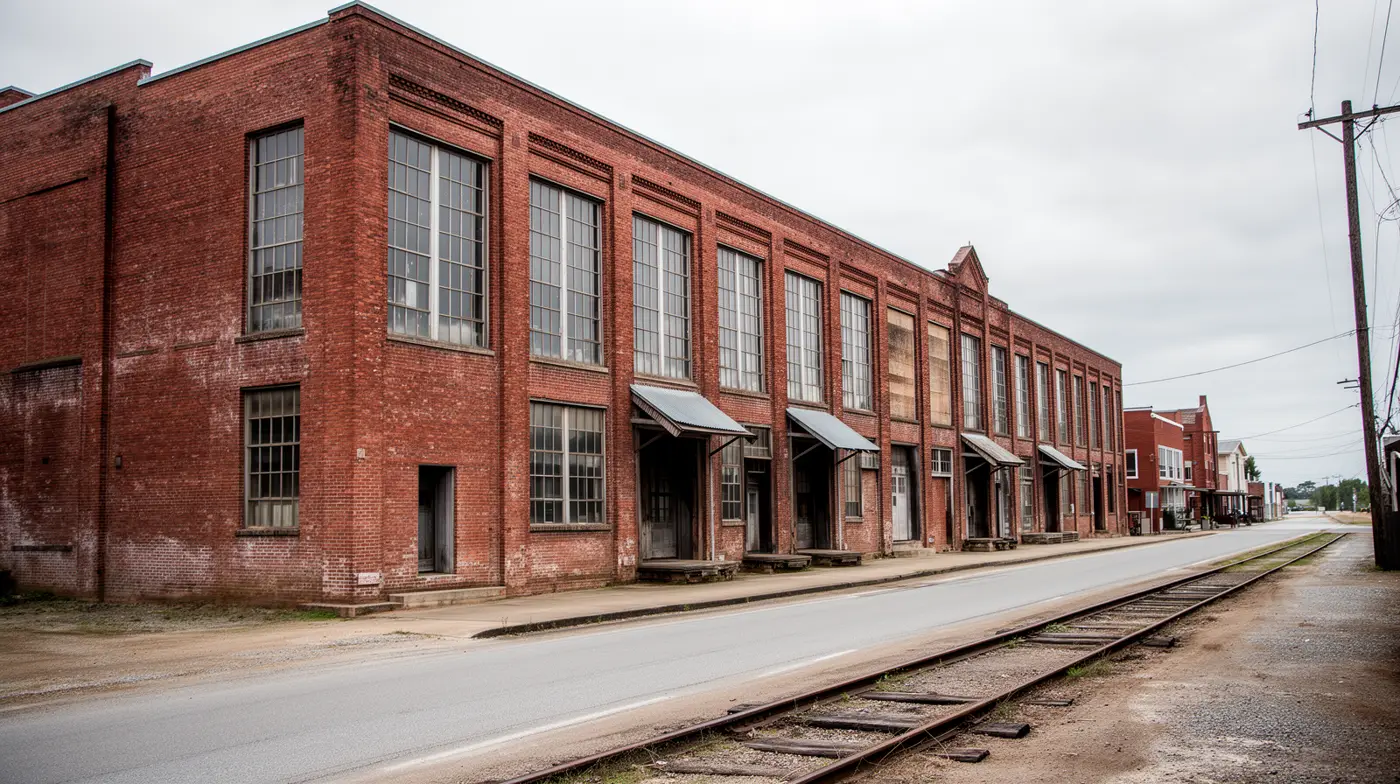
For more than a century, Pitt County's economy ran on bright-leaf tobacco. The crop suited the region's sandy Coastal Plain soil, and by the late nineteenth and early twentieth centuries the county had built the commercial infrastructure to move it — warehouses, auction floors, and the rail and freight connections needed to get cured leaf to market. Greenville itself became a significant tobacco market town, but the clearest surviving evidence of that era is in Farmville, a few miles to the southeast.
Farmville's historic warehouse district, built roughly between 1905 and 1929, is one of the best-preserved records of that economy anywhere in the region. The district spans about 116 acres and was listed on the National Register of Historic Places in 1993. Its northern section holds a cluster of large turn-of-the-century tobacco warehouses — including the J. Y. Monk Tobacco Warehouse — alongside commercial buildings like the Paramount Theatre, the Bank of Farmville, and the old East Carolina Railway office and freight station. Three residential neighborhoods surround that commercial core, with everything from restrained antebellum brick houses to more ornamented Victorian and Colonial Revival homes built by the merchants and warehousemen the tobacco trade made prosperous. Auction season shaped the rhythm of the whole town for generations, and the district's buildings are a direct physical record of how much of Pitt County's early wealth moved through a handful of warehouse floors.
East Carolina University
The institution that would eventually eclipse tobacco as the county's dominant economic force began modestly. On March 8, 1907, the North Carolina General Assembly established the East Carolina Teachers Training School, after Pitt County residents put up the land and $100,000 to secure it for Greenville. The school opened its doors on October 5, 1909, under founding president Robert H. Wright, with a mission to train teachers for eastern North Carolina's public schools — a region that, at the time, had a serious shortage of them.
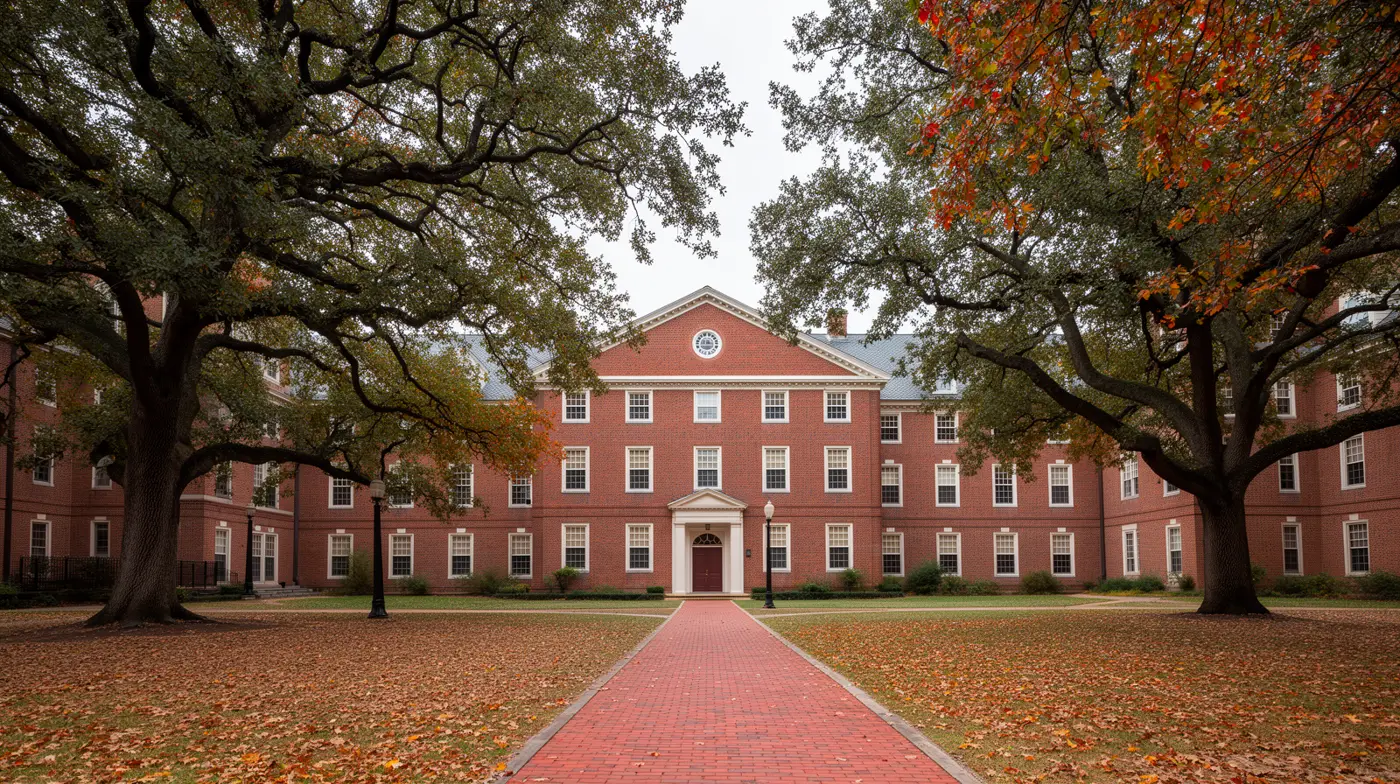
Over the following century, the school expanded steadily in mission and name — through East Carolina Teachers College, East Carolina College, and finally, in 1967, East Carolina University. Today ECU is the third-largest campus in the University of North Carolina System, and it has reshaped Greenville around it: student housing, retail corridors, and an entire local economy oriented toward a university population that swells the city every fall. What started as a single training school to address a teacher shortage is now the organizing institution of the county's largest city.
The Medical Center
ECU's growth eventually extended into medicine. A medical school and an affiliated teaching hospital grew up alongside the university through the second half of the twentieth century, and that hospital system became, in its own right, one of the largest employers and economic engines in eastern North Carolina. For years it operated as Vidant Medical Center, part of the Vidant Health system, under a joint operating agreement with ECU's Brody School of Medicine established in 2018.
In January 2022, that system announced a rebrand: Vidant Health became ECU Health, and Vidant Medical Center became ECU Health Medical Center, tying the hospital system's public identity directly to the university it had always been academically linked to. Today ECU Health Medical Center is the largest single economic anchor in Pitt County and a major regional referral hospital for eastern North Carolina — the kind of institution that draws physicians, nurses, administrators, and support staff from well outside the county, and that shapes housing demand in Greenville and its surrounding towns in ways a smaller county seat never would.
The County Today
Pitt County's 2020 census population was approximately 170,000, with roughly 91,000 of that within Greenville's city limits — making Greenville by far the county's largest city and eastern North Carolina's regional hub. The county covers about 652 square miles of Coastal Plain, with the Tar River running through it on its way to the Pamlico Sound.
Beyond Greenville, ten incorporated towns give the county a distinct texture. Winterville, just south of Greenville, is the fastest-growing of them — effectively a suburb absorbing much of the region's new-construction growth. Ayden, Farmville, and Bethel carry the county's agricultural and tobacco-warehouse heritage most visibly. Grifton, Grimesland, Simpson, Fountain, and Falkland are smaller, more rural communities, each with its own character but sharing a common thread: towns that grew up around agriculture and rail, now navigating what it means to sit within commuting distance of a university city that keeps growing. That range — a major university and medical center at the core, historic small towns radiating outward, and rural farmland filling the space between — is what makes Pitt County a genuinely varied place to buy a home.

For Further Reading
The Pitt County Historical Society, based in Greenville, is a nonprofit dedicated to compiling and preserving Pitt County's history, including preservation work on historic sites around the county.
Joyner Library Special Collections at East Carolina University holds the North Carolina Collection — one of the state's major research repositories, and the only one focused specifically on eastern North Carolina — along with manuscript holdings covering the tobacco industry, university history, and the broader region.
Sources consulted include the North Carolina General Assembly's historical session laws, NCpedia, the National Register of Historic Places documentation for the Farmville Historic District, and East Carolina University's own institutional history. Dates and institutional details verified against these sources where available.
Landscape images on this page are AI-generated illustrative representations of the river, farmland, and architecture described in the text — not archival or documentary photographs.